
Technical Specifications
| Specification | Details |
|---|---|
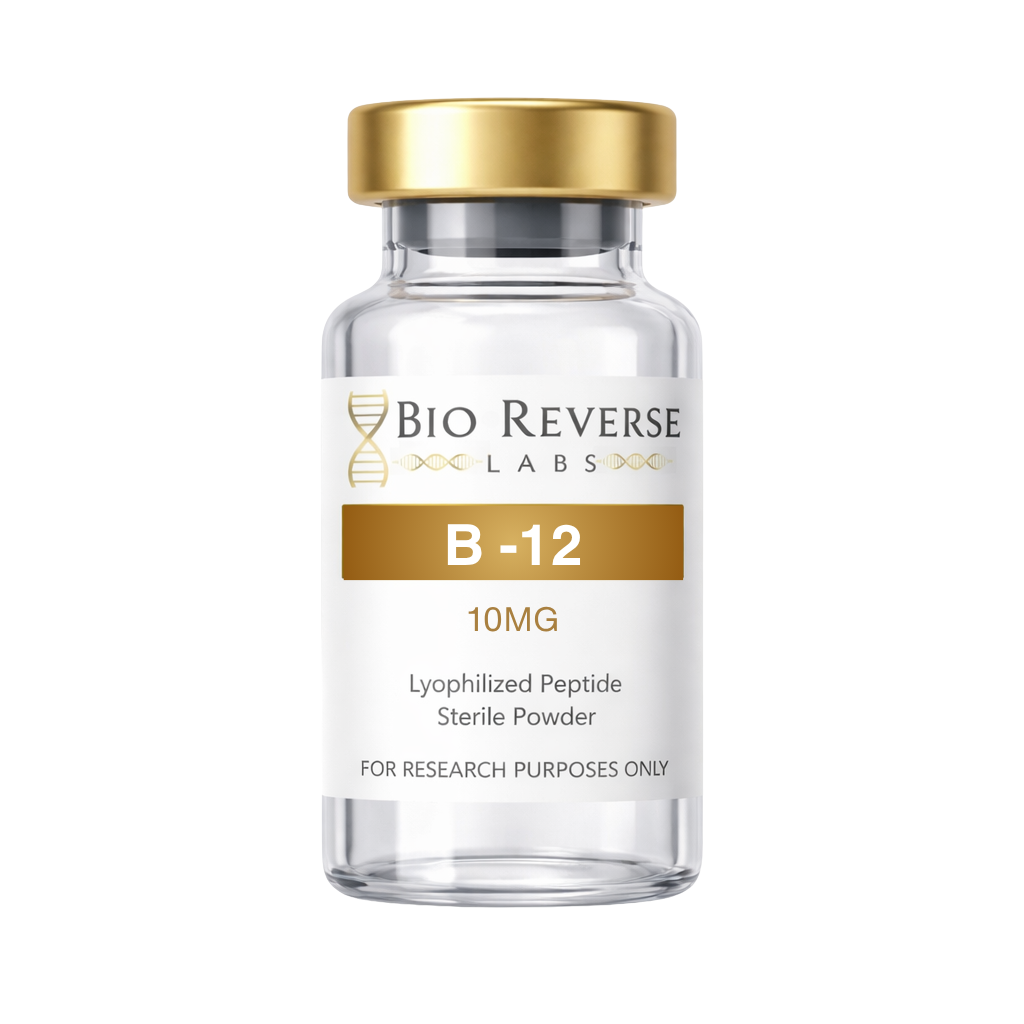
| Product Name | Vitamin B12 |
| Chemical Name | Cobalamin |
| Common Form | Cyanocobalamin |
| Molecular Formula | C₆₃H₈₈CoN₁₄O₁₄P |
| Molecular Weight | ~1355.37 g/mol |
| CAS Number | 68-19-9 |
| Classification | Water-Soluble Vitamin / Cobalamin |
| Form | Research Compound |
| Purity | ≥98% |
| Intended Use | Laboratory Research Only |
Product Overview
Vitamin B12, also known as cobalamin, is a water-soluble vitamin containing the trace element cobalt. It is an important cofactor involved in several biochemical processes, including cellular metabolism and nucleotide synthesis.
Cyanocobalamin is one of the commonly studied forms of vitamin B12 and is frequently used as a reference compound in biochemical and nutritional research.
Laboratory research involving vitamin B12 includes studies of enzyme activity, cellular metabolism, methylation pathways, hematological biology, and neurological function.
Mechanism of Action
Vitamin B12 participates in several important biochemical pathways:
Methionine Synthase Activity
B12 functions as a cofactor for methionine synthase, an enzyme involved in methionine metabolism and the conversion of homocysteine to methionine.
Methylation Research
Through its role in methionine metabolism, B12 is involved in pathways associated with one-carbon metabolism and cellular methylation.
DNA & Cellular Metabolism
B12-dependent biochemical pathways contribute to processes involved in nucleotide metabolism and normal cellular turnover.
Energy Metabolism
Vitamin B12 participates in enzymatic reactions involved in the metabolism of certain fatty acids and amino acids.
Neurological Research
Experimental research investigates B12-dependent biochemical pathways in relation to neuronal and nervous-system biology.
Research Applications
Vitamin B12 may be investigated in laboratory settings involving:
- Enzyme activity studies
- One-carbon metabolism
- Methylation research
- Homocysteine metabolism
- Cellular metabolism
- DNA and nucleotide research
- Neurological biology
- Hematological research
- Nutritional biochemistry
- Vitamin and cofactor research
- Metabolic pathway studies
Handling & Storage
- Store according to the manufacturer’s recommended conditions.
- Protect from excessive heat, moisture, and direct sunlight.
- Keep the product tightly sealed when not in use.
- Protect from prolonged exposure to light.
- Minimize unnecessary temperature fluctuations.
- Follow the applicable batch Certificate of Analysis for exact storage requirements.
- Handle using appropriate laboratory procedures.
Product Features
✓ Research Grade Quality
✓ ≥98% Purity
✓ Vitamin B12 / Cobalamin
✓ Cyanocobalamin Reference Compound
✓ Water-Soluble Vitamin
✓ Biochemical Research Material
✓ Carefully Packaged
✓ Laboratory Research Use Only
Important Notice
This product is intended exclusively for laboratory research purposes.
It is not intended for human or veterinary use, administration, injection, consumption, diagnosis, treatment, cure, or prevention of any disease.
This research-grade material should not be represented as a dietary supplement, pharmaceutical product, or treatment for any medical condition.
The exact form, purity, concentration, formulation, and analytical specifications should be verified against the applicable batch Certificate of Analysis (CoA).
By purchasing this product, the purchaser acknowledges that it will be handled only by qualified professionals in appropriate laboratory environments and used in accordance with applicable laws, regulations, and institutional protocols.
Frequently Asked Questions
What is Vitamin B12?
Vitamin B12, or cobalamin, is a water-soluble vitamin involved in several important biochemical and metabolic pathways.
Is Vitamin B12 a peptide?
No. Vitamin B12 is a cobalt-containing vitamin/cofactor, not a peptide.
What is the molecular formula of cyanocobalamin?
Cyanocobalamin has the molecular formula C₆₃H₈₈CoN₁₄O₁₄P.
What is the molecular weight of Vitamin B12?
Cyanocobalamin has a molecular weight of approximately 1355.37 g/mol.
What is Vitamin B12 researched for?
Vitamin B12 is investigated in research involving enzyme activity, methylation, one-carbon metabolism, homocysteine metabolism, cellular metabolism, neurological biology, and nutritional biochemistry.
What form of B12 is commonly used in research?
Cyanocobalamin is a commonly studied and widely characterized form of vitamin B12.
What is the purity of this product?
This product is specified at a minimum purity of ≥98%, subject to the applicable batch Certificate of Analysis.
Is this Vitamin B12 intended for human use?
No. This research-grade product is supplied strictly for laboratory research purposes and is not intended for human or veterinary use.
How should Vitamin B12 be stored?
Store according to the manufacturer’s recommended conditions, protecting the material from excessive heat, moisture, and prolonged exposure to light. Always refer to the batch-specific Certificate of Analysis for exact storage requirements.


Reviews
There are no reviews yet.