
Technical Specifications
| Specification | Details |
|---|---|
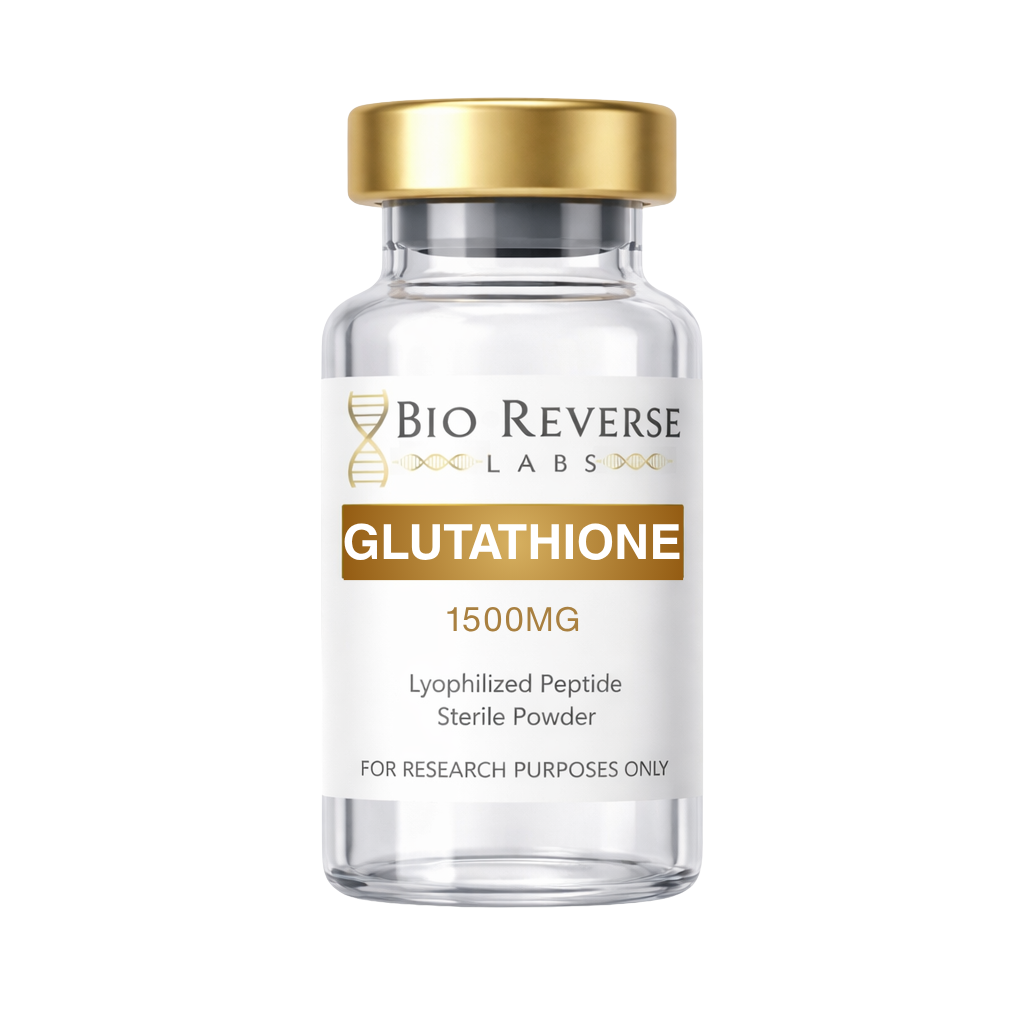
| Product Name | Glutathione |
| Common Name | Reduced Glutathione (GSH) |
| Strength | 1500 mg |
| Chemical Name | γ-L-Glutamyl-L-Cysteinylglycine |
| Molecular Formula | C₁₀H₁₇N₃O₆S |
| Molecular Weight | ~307.32 g/mol |
| CAS Number | 70-18-8 |
| Sequence | γ-Glu-Cys-Gly |
| Sequence Code | E-C-G |
| Sequence Length | 3 amino acids |
| Purity | ≥98% |
| Form | Lyophilized Peptide / Powder |
| Classification | Endogenous Thiol-Containing Tripeptide |
| Intended Use | Laboratory Research Only |
Product Overview
Glutathione is a naturally occurring three-amino-acid tripeptide composed of glutamic acid, cysteine, and glycine. Its reduced form, commonly abbreviated GSH, is an important thiol-containing compound involved in cellular redox biology.
Glutathione has been extensively investigated in laboratory research involving oxidative stress, redox balance, enzyme activity, cellular defense mechanisms, and metabolic pathways.
The reactive sulfhydryl group of cysteine makes GSH an important research compound for studying thiol-dependent biochemical reactions and cellular antioxidant systems.
Mechanism of Action
Research has investigated reduced glutathione in relation to several biological mechanisms:
Redox Biology
GSH participates in reversible redox reactions and can be oxidized to glutathione disulfide (GSSG) during oxidative processes.
Antioxidant Research
Glutathione serves as an important intracellular reducing agent and is widely studied in experimental models involving oxidative stress.
Glutathione Peroxidase Activity
GSH functions as a substrate for glutathione peroxidase, an enzyme involved in the reduction of hydrogen peroxide and lipid hydroperoxides.
Glutathione S-Transferase Research
Glutathione participates in reactions catalyzed by glutathione S-transferases (GSTs), enzymes involved in the metabolism of various electrophilic compounds.
Cellular Redox Balance
The GSH/GSSG ratio is commonly investigated as an indicator of cellular redox status in experimental systems.
Research Applications
Glutathione may be investigated in laboratory settings involving:
- Oxidative-stress research
- Cellular redox biology
- GSH/GSSG studies
- Antioxidant research
- Glutathione peroxidase studies
- Glutathione S-transferase research
- Enzyme activity assays
- Thiol chemistry
- Cellular defense mechanisms
- Metabolic pathway research
- Biochemical research
- Peptide structure-function studies
Handling & Storage
- Store the lyophilized material according to the manufacturer’s recommended conditions.
- Protect from excessive heat, moisture, and direct sunlight.
- Keep the product tightly sealed when not in use.
- Minimize prolonged exposure to air and moisture.
- Protect from prolonged exposure to light.
- Follow the applicable batch Certificate of Analysis for exact storage requirements.
- Avoid unnecessary temperature fluctuations.
- Handle using appropriate laboratory procedures.
Product Features
✓ Research Grade Quality
✓ 1500mg Quantity
✓ ≥98% Purity
✓ Reduced Glutathione (GSH)
✓ γ-Glu-Cys-Gly Sequence
✓ 3-Amino-Acid Tripeptide
✓ Thiol-Containing Peptide
✓ Carefully Packaged
✓ Laboratory Research Use Only
Important Notice
This product is intended exclusively for laboratory research purposes.
It is not intended for human or veterinary use, administration, injection, consumption, diagnosis, treatment, cure, or prevention of any disease.
This research-grade glutathione should not be represented as a pharmaceutical product, dietary supplement, or treatment for any medical condition.
The exact purity, oxidation state, formulation, and analytical specifications should be verified against the applicable batch Certificate of Analysis (CoA).
By purchasing this product, the purchaser acknowledges that it will be handled only by qualified professionals in appropriate laboratory environments and used in accordance with applicable laws, regulations, and institutional protocols.
Frequently Asked Questions
What is Glutathione?
Glutathione is a naturally occurring tripeptide composed of glutamic acid, cysteine, and glycine. The reduced form is commonly abbreviated GSH.
What is the sequence of Glutathione?
Reduced glutathione has the sequence:
γ-Glu-Cys-Gly
or:
E-C-G.
How many amino acids does Glutathione contain?
Glutathione is a tripeptide, containing three amino-acid residues.
What is the molecular weight of Glutathione?
Reduced glutathione has a molecular weight of approximately 307.32 g/mol.
What is Glutathione researched for?
Glutathione is investigated in research involving oxidative stress, cellular redox balance, antioxidant mechanisms, glutathione-dependent enzymes, thiol chemistry, and cellular defense pathways.
What is the difference between GSH and GSSG?
GSH is the reduced form of glutathione, while GSSG is glutathione disulfide, the oxidized form produced when two glutathione molecules form a disulfide bond.
Is Glutathione a peptide?
Yes. Glutathione is a naturally occurring three-amino-acid tripeptide.
What form does Glutathione 1500mg come in?
Glutathione 1500mg is supplied as a research-grade lyophilized material/powder intended for laboratory research.
What is the purity of Glutathione?
This product is specified at a minimum purity of ≥98%, subject to the applicable batch Certificate of Analysis.
Is Glutathione intended for human use?
No. This research-grade product is supplied strictly for laboratory research purposes and is not intended for human or veterinary use.
How should Glutathione be stored?
The material should be protected from excessive heat, moisture, light, and prolonged exposure to air and stored according to the manufacturer’s recommended conditions. Always refer to the batch-specific Certificate of Analysis for exact storage requirements.
Reviews
There are no reviews yet.